Last updated September 2026
Kenya’s coastline isn’t just one destination. It’s a series of completely different experiences layered along the Indian Ocean.
In one week, you can move from a historic Swahili port city, to wide open white-sand beaches, to an island where there are no cars and life still runs on dhow time.
If you’re starting in Nairobi, this is how I structured a week exploring the Kenyan coast, and why this combination worked.

Jump To
- How to Get From Nairobi to the Coast
- Stop One: Mombasa
- Stop Two: Diani Beach
- Stop Three: Lamu
- My One-Week Kenyan Coast Itinerary
- Getting Between Each Stop
- Final Thoughts
How to Get From Nairobi to the Coast
From Nairobi, you have two main options:
- Fly (about 1 hour; fast but forgettable)
- Take the SGR Madaraka Express train (slower, but part of the experience)
I took the train. It runs from Nairobi Terminus (Syokimau) to Mombasa Terminus (Miritini), with three daily departures: an 8 a.m. Inter-County train that makes more stops (about 6 hours), and 3 p.m. and 10 p.m. Express trains (about 5 to 5.5 hours).
Booking SGR Tickets
Only book through official channels:
- The official Kenya Railways booking portal, metickets.krc.co.ke
- The USSD code *639# on a Kenyan phone number
- At an SGR station
Kenya Railways has warned that third-party sites selling tickets are often scams. Tickets can usually be booked up to about 60 days in advance, and they can sell out, especially around holidays.
One-way fares from Nairobi to Mombasa (subject to change):
- Economy: KSh 1,500 (about $12)
- First Class: KSh 4,500 (about $35)
- Premium: KSh 12,000 (about $93)
Mombasa Terminus is about 30 minutes outside the city, so you’ll still need a taxi or transfer to reach Old Town or the beaches. I recommend booking a driver ahead of time so someone is waiting for you when you arrive. Finding an Uber there was stressful.


Stop One: Mombasa
Mombasa is Kenya’s second-largest city and one of the oldest trading ports on the Swahili Coast. The history here is layered: African, Arab, Portuguese, and Indian influences all in one place.
For most travelers (myself included), one night in Mombasa is enough.
I stayed one night and did a walking tour through Mombasa Old Town, which gave me:
- Narrow historic streets
- Intricately carved wooden doors
- Coral-stone buildings
- A sense of how important this port has been for centuries
Then I moved on.


Stop Two: Diani Beach
From Mombasa, I headed south to Diani Beach, about 1 to 2 hours away depending on traffic and the Likoni Ferry crossing.
When planning this trip, I kept hearing that Diani and Watamu are fairly similar: both beautiful, both beach-focused. With only a week, I chose one.
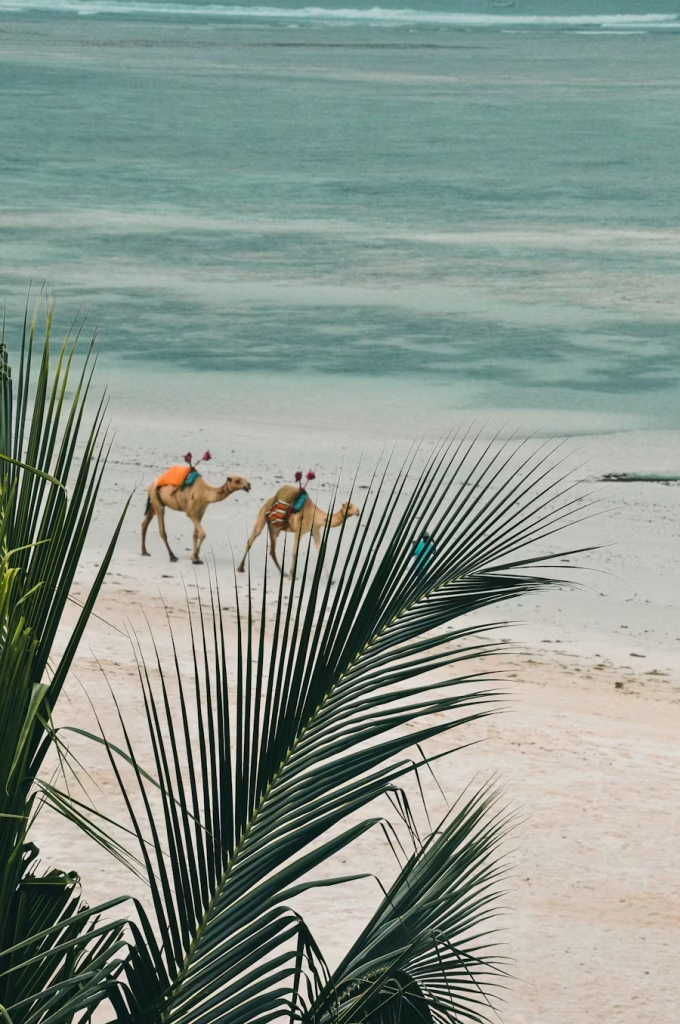
I picked Diani because multiple friends said it was their favorite place on the Kenyan coast. Diani is exactly what you imagine when you think of East Africa:
- Long white-sand beaches
- Palm trees leaning toward the water
- Warm Indian Ocean
- Slow, restorative days
This part of the trip was intentionally unstructured. Beach walks, long lunches, swimming, and doing absolutely nothing.

Stop Three: Lamu (The Cultural Core of the Trip)
After the beach reset, I headed north to Lamu, which is completely different from the rest of the coast.
Lamu is part of the Lamu Archipelago, and Lamu Old Town is a UNESCO World Heritage Site known for being one of the oldest and best-preserved Swahili settlements in East Africa.
The culture here is deeply Swahili, shaped by centuries of trade between African, Arab, Persian, and Indian communities. The Bajuni, one of the coastal Swahili-speaking peoples, live on many of the islands in the archipelago.
What makes Lamu immediately feel different:
- No cars on the island
- Transportation by foot, donkey, or boat
- Traditional Swahili architecture with carved doors and inner courtyards
This is not a place to rush through. Giving Lamu four days allowed time to:
- Wander Old Town slowly
- Take dhow trips at sunset
- Visit nearby areas like Shela
- Actually absorb the culture instead of just photographing it


My One-Week Kenyan Coast Itinerary
- Day 1: SGR train from Nairobi to Mombasa, overnight in Mombasa
- Day 2: Old Town walking tour, then on to Diani Beach
- Days 3–4: Diani Beach
- Days 5–8: Lamu, then fly back to Nairobi
This balance gave me history lessons, beach time, boats, and breathing room. Pairing the coast with a safari? See my 10-day Kenya itinerary for how to fit it all together.


Getting Between Each Stop
Nairobi to Mombasa
SGR Madaraka Express train (5–6 hours) or a flight (about 1 hour). See booking SGR tickets above.
Mombasa to Diani Beach
- Taxi, Uber, or a pre-booked driver
- Shuttle
- Most routes cross on the Likoni Ferry
Travel time: roughly 1–2 hours, depending on traffic and the ferry.
Diani to Lamu
This is the part that confuses most travelers. You generally have two realistic routes:
- Option 1 (most common): Fly from Ukunda (Diani’s airstrip) to Manda Airport, which serves Lamu.
- Option 2 (longer): Travel back to Mombasa, then fly, or take a bus plus a boat.
Because Lamu is an island, you’ll always finish with a short boat transfer to Lamu Town or Shela.
Leaving Lamu
- Fly back to Nairobi (most efficient)
- Or continue exploring the northern coast
Final Thoughts: A Week on the Kenyan Coast
The Kenyan coast isn’t just a beach destination. It’s a cultural corridor.
Mombasa gives you history.
Diani gives you rest.
Lamu gives you depth.
If you only have a week, combining all three shows how dramatically the coast changes as you move along it. Travel slowly, soak it in, and let the coast leave its mark. For more, browse all my Kenya travel guides.
Planning a trip to East Africa? Subscribe for new guides in your inbox.